
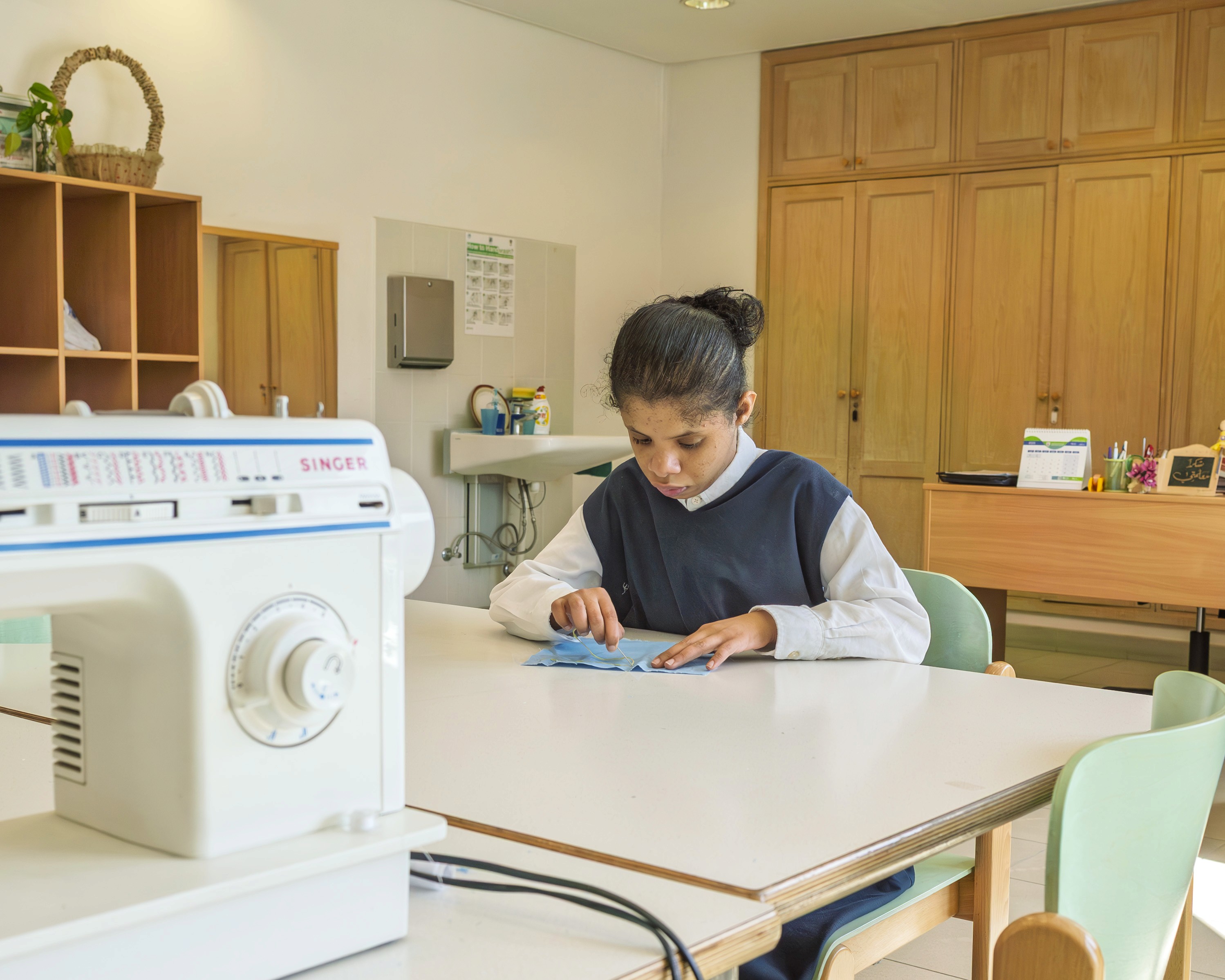
Vocational Training
Vocational training has been designed to include specialized workshops that aim to develop life skills and empower persons with disabilities to become active members of society. Many students benefit greatly from these workshops, which help enhance their abilities and potential, fill their time with purposeful activities, and have prepared some of them for fieldwork in various specialized institutions.
Computer Skills Training
In this area, the Society focuses on interventions for cases in which a child’s condition affects speech or expressive abilities. The service is dedicated to enhancing all aspects of communication skills, including language comprehension and use, speech clarity, fluency, and proper vocal production. These efforts are essential for improving the children’s overall social communication abilities.
Photography and Laminating
The Society is committed to training its students to use both black‑and‑white and color photocopy machines, as well as the various functions these machines offer, such as producing multiple copies, resizing, paper feeding, and basic maintenance. They are also trained to use card‑laminating devices. These skills have enabled many students to enter the workforce in certain fields and institutions in cooperation with the Society.
Carpentry
Experience has shown that many children with disabilities possess distinctive artistic and manual talents, though they require training to develop their skills. For this reason, the Society places great emphasis on this area by training students on how to select different types of wood, introducing them to the tools used in carpentry and how to operate them, and teaching the proper methods of cutting, smoothing, sawing, and sanding. They also learn wood assembly techniques, painting skills, and the use of dyes.
Upholstery
Recognizing the varied talents of its students, the Society observed that some of them have a particular interest in furniture‑related work and show enthusiasm for learning it. Students are therefore trained in dismantling and assembling furniture, upholstering chairs and seating sets, and adding necessary accessories. This training is delivered by specialized technicians in the field.
Pottery
Among the important training activities offered to children is learning how to work with clay and the tools used in making pottery. Training includes preparing, shaping, and smoothing the clay, as well as producing handcrafted pottery pieces, painting them, and using pottery kilns.
Laundry (Washing and Ironing)
The Society trains students to use automatic washing machines and dryers, and instructs them in manual washing. They also learn how to iron clothing using both standard irons and steam irons.
Sewing
The Society is committed to teaching sewing skills to its students, particularly girls. They are offered introductory workshops that help them become familiar with sewing tools, how to use them, and how to care for them. Students learn different types of stitches, needlework, and embroidery techniques.
Those interested receive additional training in creating table covers, quilts, dolls, and decorative items. They also learn how to embellish their creations using materials such as beads, crystals, and colored ribbons. This work extends to producing a wide range of items, including kitchen textiles such as floor mats, covers for kitchen tools, knife and pot handles, heat‑protective pads, as well as items for children’s rooms and designs for tablecloths and bedding.
Handicrafts
The Society is dedicated to developing the students’ creative artistic skills, recognizing the importance of such activities in building self‑confidence and encouraging them to engage in tasks they enjoy. These activities also allow them to earn income from their work. Students are trained to use a variety of materials to produce artistic pieces of distinctive value.
On special occasions, the Society showcases these handmade creations for sale, including women’s accessories, bags, lampshades, gift boxes, bathroom sets, kitchen items, and many other handmade crafts.
Agriculture
The Society believes that gardening is a rich and highly beneficial activity that provides valuable physical engagement. It contributes to creating joy, vitality, confidence, and renewal in the students. Gardening also enhances analytical skills, productivity, and creativity.
Developing an interest in gardening helps reduce stress and fatigue, promotes relaxation and calmness, and encourages fresh‑air exposure. Agricultural activities improve cognitive abilities and social skills among persons with disabilities, in addition to enhancing their motor and language skills.
Japanese Weaving (Saori)
The Society does not limit itself to traditional training areas but has expanded into activities that offer significant value to its students. Among these is teaching them the art of Japanese hand‑weaving known as Saori.
This type of weaving is characterized by its free, expressive style and is easy to learn, allowing individuals to express themselves regardless of age, gender, disability, or intellectual ability. Students with disabilities particularly enjoy this activity and participate enthusiastically in training sessions.
Saori weaving embraces imperfections; loose threads, uneven edges, and unintentional mistakes are considered unique features that enhance the beauty and originality of the work, giving each piece its own distinctive character.
This craft attracts the interest of students and their families, and the finished pieces are admired by everyone who sees them. Most of the products are sold at exhibitions, festivals, and other artistic events.
Computer Skills Training
In this area, the Society focuses on interventions for cases in which a child’s condition affects speech or expressive abilities. The service is dedicated to enhancing all aspects of communication skills, including language comprehension and use, speech clarity, fluency, and proper vocal production. These efforts are essential for improving the children’s overall social communication abilities.
Photography and Laminating
The Society is committed to training its students to use both black‑and‑white and color photocopy machines, as well as the various functions these machines offer, such as producing multiple copies, resizing, paper feeding, and basic maintenance. They are also trained to use card‑laminating devices. These skills have enabled many students to enter the workforce in certain fields and institutions in cooperation with the Society.
Carpentry
Experience has shown that many children with disabilities possess distinctive artistic and manual talents, though they require training to develop their skills. For this reason, the Society places great emphasis on this area by training students on how to select different types of wood, introducing them to the tools used in carpentry and how to operate them, and teaching the proper methods of cutting, smoothing, sawing, and sanding. They also learn wood assembly techniques, painting skills, and the use of dyes.
Upholstery
Recognizing the varied talents of its students, the Society observed that some of them have a particular interest in furniture‑related work and show enthusiasm for learning it. Students are therefore trained in dismantling and assembling furniture, upholstering chairs and seating sets, and adding necessary accessories. This training is delivered by specialized technicians in the field.
Pottery
Among the important training activities offered to children is learning how to work with clay and the tools used in making pottery. Training includes preparing, shaping, and smoothing the clay, as well as producing handcrafted pottery pieces, painting them, and using pottery kilns.
Laundry (Washing and Ironing)
The Society trains students to use automatic washing machines and dryers, and instructs them in manual washing. They also learn how to iron clothing using both standard irons and steam irons.
Sewing
The Society is committed to teaching sewing skills to its students, particularly girls. They are offered introductory workshops that help them become familiar with sewing tools, how to use them, and how to care for them. Students learn different types of stitches, needlework, and embroidery techniques.
Those interested receive additional training in creating table covers, quilts, dolls, and decorative items. They also learn how to embellish their creations using materials such as beads, crystals, and colored ribbons. This work extends to producing a wide range of items, including kitchen textiles such as floor mats, covers for kitchen tools, knife and pot handles, heat‑protective pads, as well as items for children’s rooms and designs for tablecloths and bedding.
Handicrafts
The Society is dedicated to developing the students’ creative artistic skills, recognizing the importance of such activities in building self‑confidence and encouraging them to engage in tasks they enjoy. These activities also allow them to earn income from their work. Students are trained to use a variety of materials to produce artistic pieces of distinctive value.
On special occasions, the Society showcases these handmade creations for sale, including women’s accessories, bags, lampshades, gift boxes, bathroom sets, kitchen items, and many other handmade crafts.
Agriculture
The Society believes that gardening is a rich and highly beneficial activity that provides valuable physical engagement. It contributes to creating joy, vitality, confidence, and renewal in the students. Gardening also enhances analytical skills, productivity, and creativity.
Developing an interest in gardening helps reduce stress and fatigue, promotes relaxation and calmness, and encourages fresh‑air exposure. Agricultural activities improve cognitive abilities and social skills among persons with disabilities, in addition to enhancing their motor and language skills.
Japanese Weaving (Saori)
The Society does not limit itself to traditional training areas but has expanded into activities that offer significant value to its students. Among these is teaching them the art of Japanese hand‑weaving known as Saori.
This type of weaving is characterized by its free, expressive style and is easy to learn, allowing individuals to express themselves regardless of age, gender, disability, or intellectual ability. Students with disabilities particularly enjoy this activity and participate enthusiastically in training sessions.
Saori weaving embraces imperfections; loose threads, uneven edges, and unintentional mistakes are considered unique features that enhance the beauty and originality of the work, giving each piece its own distinctive character.
This craft attracts the interest of students and their families, and the finished pieces are admired by everyone who sees them. Most of the products are sold at exhibitions, festivals, and other artistic events.

© 2026-1971 The Kuwait Society For The Handicapped . All rights reserved | Made with ❤️ by the KSH Team