Makaton (ME)
The Society benefited from an important project offered by the British Makaton Centre, aimed at developing the Makaton Vocabulary Development Project (MVDP) for children with disabilities.
The Makaton Centre is a UK‑based charitable, non‑profit organization. It provides a program designed to develop language and vocabulary skills, and the Society has obtained the rights to use, translate, print, and publish the program.
The Makaton Language Program was specially designed to support the development of communication, language, reading, and writing skills for children and adults with learning and communication difficulties. This includes individuals with intellectual disabilities, autism, Down syndrome, physical disabilities, and particularly those with language disorders.
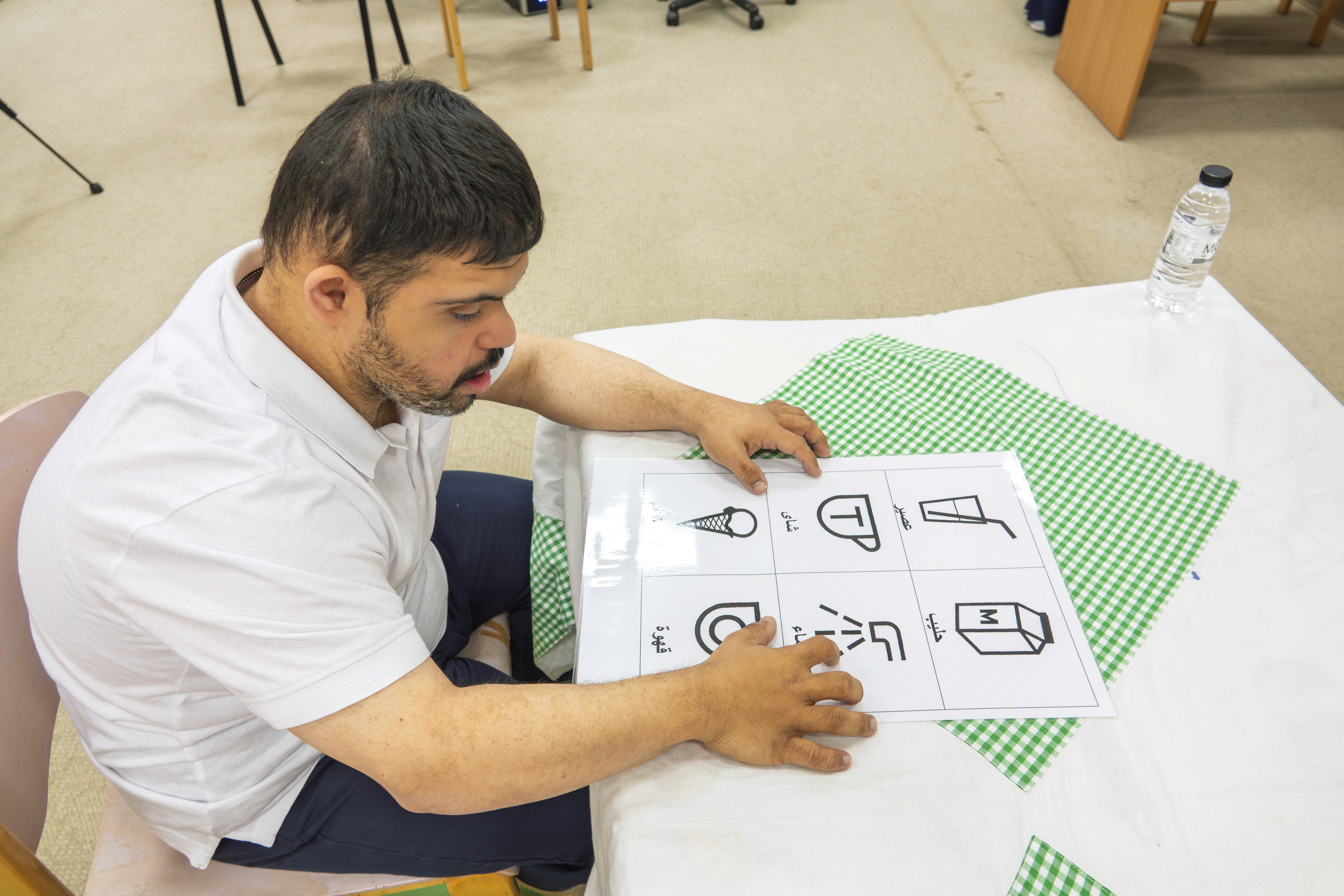
The program offers a comprehensive communication approach that uses speech, manual signs, and symbols as different methods to enhance an individual’s ability to express themselves, understand the information they receive, and interact with the people around them.
Makaton vocabulary was created in the early 1970s by Mrs. Margaret Walker, a speech and language therapist and senior lecturer in the Department of Speech and Language Disorders at St. George’s College, University of London. The Makaton Vocabulary Development Project was formally established in 1978 as a British charitable foundation.
The program expanded to 40 countries worldwide, including Kuwait and several Gulf countries in 1988, after being adapted and translated to meet local needs and cultural requirements, while considering Arab and Islamic concepts. This work was carried out by Mrs. Sabaika Saad Al‑Jasser, then Vice Chairperson of the Society’s Board of Directors and currently its Chairperson, who also serves as Director of the Makaton Centre for Kuwait and the Gulf region. The program’s vocabulary was aligned with the sign language used in Kuwait’s Deaf community, and new symbols were developed to serve Islamic and Arab cultural contexts.
The Makaton Centre provides training courses and lectures to help specialists, teachers, and parents understand and apply the program with children and adults with disabilities.
The Centre also produces educational materials, symbol and sign reference guides, videos, booklets, instructional manuals, and computer software to support effective and efficient implementation of the program.
A certified and licensed team of trainers delivers training, guidance, and general information about the program in Kuwait and across the Gulf region.
The Centre also conducts training courses in several Gulf and Arab countries such as Saudi Arabia, Qatar, and Lebanon, preparing highly qualified and accredited trainers who can represent the program in their own institutions.
The Society benefited from an important project offered by the British Makaton Centre, aimed at developing the Makaton Vocabulary Development Project (MVDP) for children with disabilities.
The Makaton Centre is a UK‑based charitable, non‑profit organization. It provides a program designed to develop language and vocabulary skills, and the Society has obtained the rights to use, translate, print, and publish the program.
The Makaton Language Program was specially designed to support the development of communication, language, reading, and writing skills for children and adults with learning and communication difficulties. This includes individuals with intellectual disabilities, autism, Down syndrome, physical disabilities, and particularly those with language disorders.
The program offers a comprehensive communication approach that uses speech, manual signs, and symbols as different methods to enhance an individual’s ability to express themselves, understand the information they receive, and interact with the people around them.
Makaton vocabulary was created in the early 1970s by Mrs. Margaret Walker, a speech and language therapist and senior lecturer in the Department of Speech and Language Disorders at St. George’s College, University of London. The Makaton Vocabulary Development Project was formally established in 1978 as a British charitable foundation.
The program expanded to 40 countries worldwide, including Kuwait and several Gulf countries in 1988, after being adapted and translated to meet local needs and cultural requirements, while considering Arab and Islamic concepts. This work was carried out by Mrs. Sabaika Saad Al‑Jasser, then Vice Chairperson of the Society’s Board of Directors and currently its Chairperson, who also serves as Director of the Makaton Centre for Kuwait and the Gulf region. The program’s vocabulary was aligned with the sign language used in Kuwait’s Deaf community, and new symbols were developed to serve Islamic and Arab cultural contexts.
The Makaton Centre provides training courses and lectures to help specialists, teachers, and parents understand and apply the program with children and adults with disabilities.
The Centre also produces educational materials, symbol and sign reference guides, videos, booklets, instructional manuals, and computer software to support effective and efficient implementation of the program.
A certified and licensed team of trainers delivers training, guidance, and general information about the program in Kuwait and across the Gulf region.
The Centre also conducts training courses in several Gulf and Arab countries such as Saudi Arabia, Qatar, and Lebanon, preparing highly qualified and accredited trainers who can represent the program in their own institutions.
The Society benefited from an important project offered by the British Makaton Centre, aimed at developing the Makaton Vocabulary Development Project (MVDP) for children with disabilities.
The Makaton Centre is a UK‑based charitable, non‑profit organization. It provides a program designed to develop language and vocabulary skills, and the Society has obtained the rights to use, translate, print, and publish the program.
The Makaton Language Program was specially designed to support the development of communication, language, reading, and writing skills for children and adults with learning and communication difficulties. This includes individuals with intellectual disabilities, autism, Down syndrome, physical disabilities, and particularly those with language disorders.
The program offers a comprehensive communication approach that uses speech, manual signs, and symbols as different methods to enhance an individual’s ability to express themselves, understand the information they receive, and interact with the people around them.
Makaton vocabulary was created in the early 1970s by Mrs. Margaret Walker, a speech and language therapist and senior lecturer in the Department of Speech and Language Disorders at St. George’s College, University of London. The Makaton Vocabulary Development Project was formally established in 1978 as a British charitable foundation.
The program expanded to 40 countries worldwide, including Kuwait and several Gulf countries in 1988, after being adapted and translated to meet local needs and cultural requirements, while considering Arab and Islamic concepts. This work was carried out by Mrs. Sabaika Saad Al‑Jasser, then Vice Chairperson of the Society’s Board of Directors and currently its Chairperson, who also serves as Director of the Makaton Centre for Kuwait and the Gulf region. The program’s vocabulary was aligned with the sign language used in Kuwait’s Deaf community, and new symbols were developed to serve Islamic and Arab cultural contexts.
The Makaton Centre provides training courses and lectures to help specialists, teachers, and parents understand and apply the program with children and adults with disabilities.
The Centre also produces educational materials, symbol and sign reference guides, videos, booklets, instructional manuals, and computer software to support effective and efficient implementation of the program.
A certified and licensed team of trainers delivers training, guidance, and general information about the program in Kuwait and across the Gulf region.
The Centre also conducts training courses in several Gulf and Arab countries such as Saudi Arabia, Qatar, and Lebanon, preparing highly qualified and accredited trainers who can represent the program in their own institutions.
© 2026-1971 The Kuwait Society For The Handicapped . All rights reserved | Made with ❤️ by the KSH Team