Integrated Care
KSH provides a nutrition and feeding service for individuals enrolled in the integrated care department. It ensures that their meals contain all the necessary nutritional elements, tailored to the child's age, height, weight, type of disability, and physical activity level, in accordance with the requirements of balanced and healthy nutrition.
A nutrition specialist develops a suitable dietary plan for each individual case, based on the results of periodic medical and laboratory examinations of the children. This is to determine the type and quantity of food needed for each of them. Nutritional supplements may be incorporated to support the dietary program, especially since many of the children experience growth delays.
When developing the dietary plan, the following are taken into consideration:
Difficulty chewing and swallowing.
Specific oral and dental problems.
Vomiting and rumination.
Food allergies to certain foods.
Sensitivity of individuals with autism to gluten and casein, and the necessity for their food to be free from these two substances.
To overcome the aforementioned difficulties, the following measures are implemented:
Ensuring food is served fresh.
Avoiding preservatives, flavorings, and artificial colors in food.
Serving boiled and pureed food for cases with chewing and swallowing difficulties.
Increasing the thickness of liquids.
Considering the physical position during feeding, especially the posture of the head, chest, and limbs.
Adjusting the consistency of meals for those with digestive or oral problems.
Providing special meals for those with reduced ability to chew and swallow.
Offering special meals for those with allergies to certain food ingredients.
Taking into account individuals who are adversely affected by inhaling food odors.
Ensuring caution to prevent food from entering the respiratory tract.
Providing liquid meals via an enteral tube for those with digestive issues, inability to chew or swallow, or those who experience food reflux.
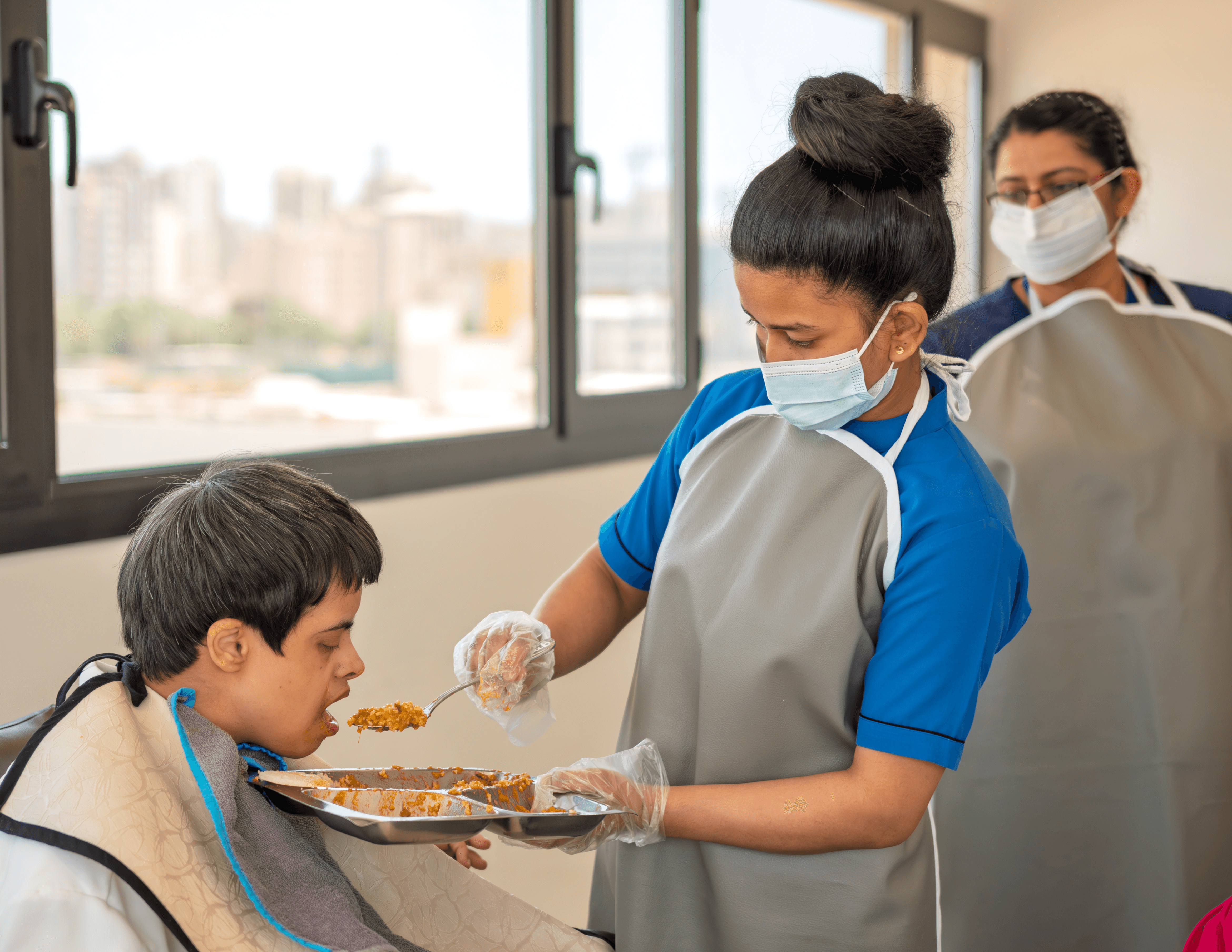
KSH provides a nutrition and feeding service for individuals enrolled in the integrated care department. It ensures that their meals contain all the necessary nutritional elements, tailored to the child's age, height, weight, type of disability, and physical activity level, in accordance with the requirements of balanced and healthy nutrition.
A nutrition specialist develops a suitable dietary plan for each individual case, based on the results of periodic medical and laboratory examinations of the children. This is to determine the type and quantity of food needed for each of them. Nutritional supplements may be incorporated to support the dietary program, especially since many of the children experience growth delays.
When developing the dietary plan, the following are taken into consideration:
Difficulty chewing and swallowing.
Specific oral and dental problems.
Vomiting and rumination.
Food allergies to certain foods.
Sensitivity of individuals with autism to gluten and casein, and the necessity for their food to be free from these two substances.
To overcome the aforementioned difficulties, the following measures are implemented:
Ensuring food is served fresh.
Avoiding preservatives, flavorings, and artificial colors in food.
Serving boiled and pureed food for cases with chewing and swallowing difficulties.
Increasing the thickness of liquids.
Considering the physical position during feeding, especially the posture of the head, chest, and limbs.
Adjusting the consistency of meals for those with digestive or oral problems.
Providing special meals for those with reduced ability to chew and swallow.
Offering special meals for those with allergies to certain food ingredients.
Taking into account individuals who are adversely affected by inhaling food odors.
Ensuring caution to prevent food from entering the respiratory tract.
Providing liquid meals via an enteral tube for those with digestive issues, inability to chew or swallow, or those who experience food reflux.
Nursing Division
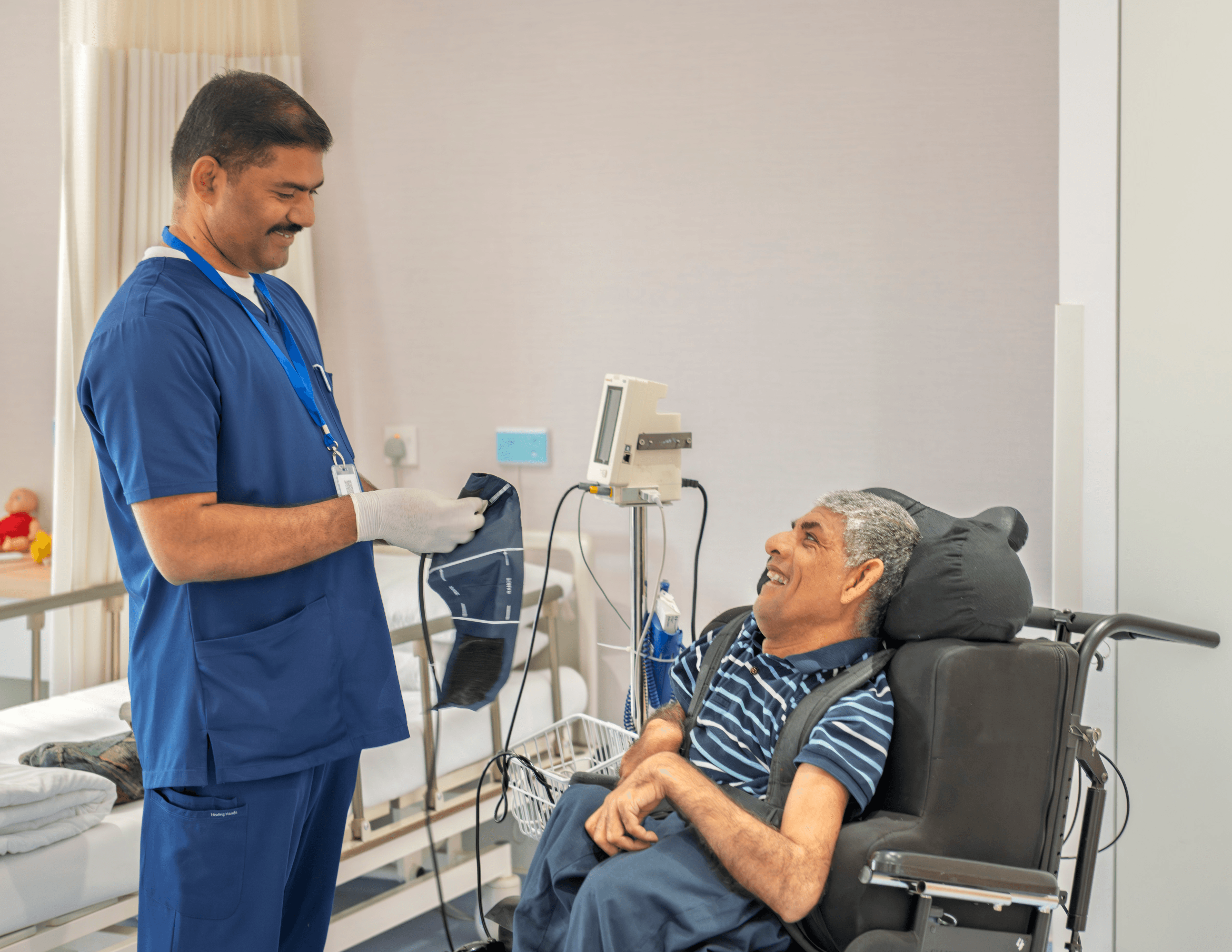
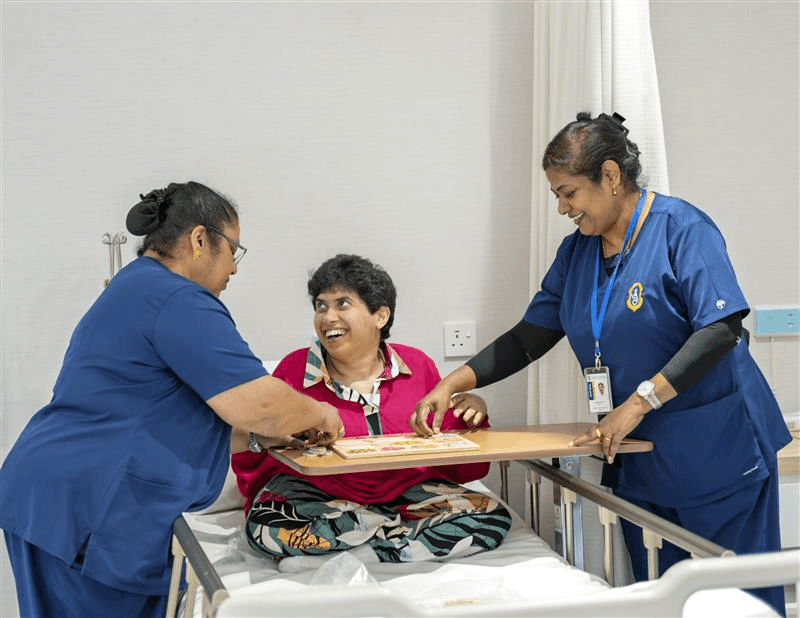
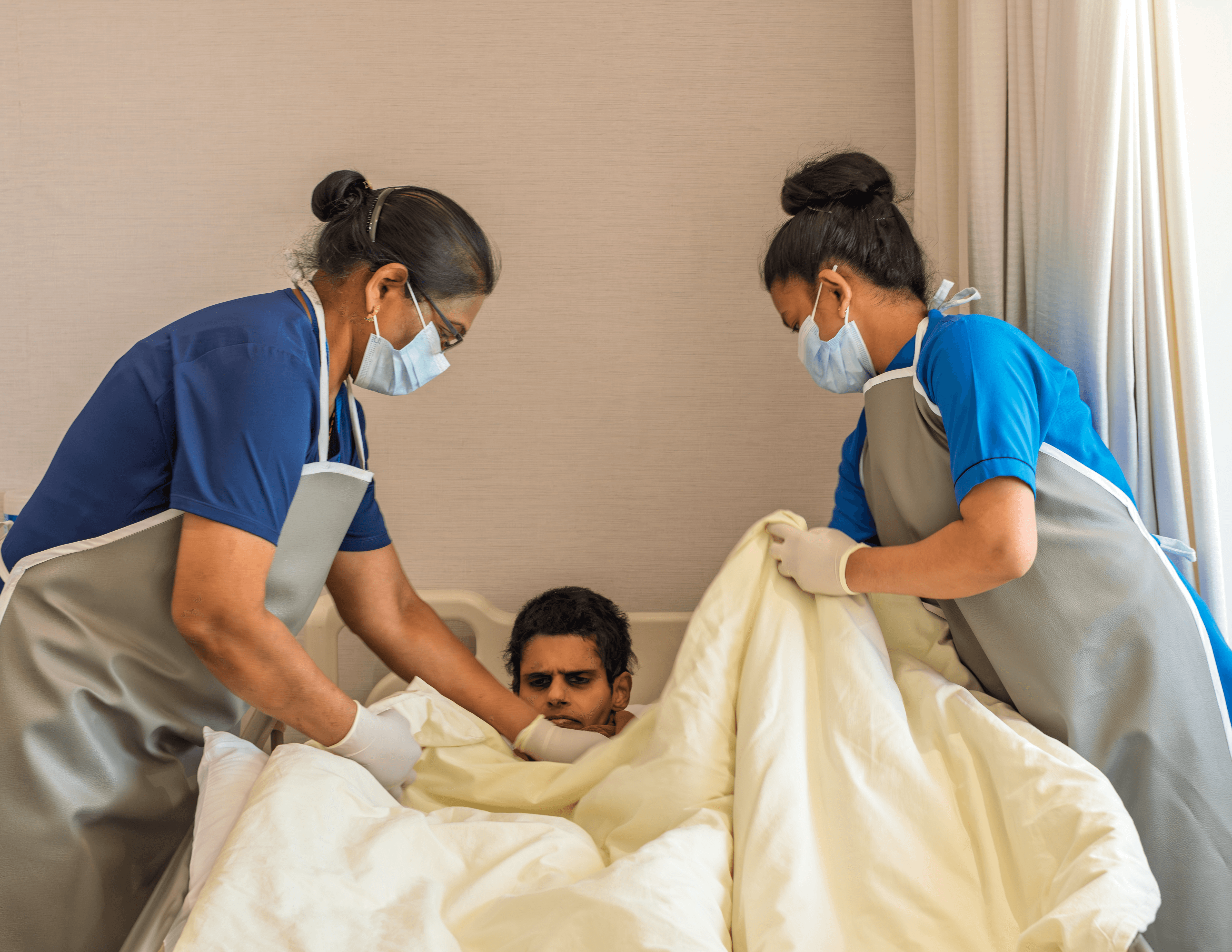
The role played by the nursing division is fundamental in assisting the children. Specialized nurses carry out medical and therapeutic recommendations, provide care for the children, and accompany them during rehabilitation and recreational activities, both inside and outside the association.
The association spares no effort in providing all possible health services, in addition to examinations and vaccinations, in cooperation with the Preventive Health Department of the Ministry of Health. Periodic blood tests are also conducted for all children in the integrated care program.
Nursing Division
The role played by the nursing division is fundamental in assisting the children. Specialized nurses carry out medical and therapeutic recommendations, provide care for the children, and accompany them during rehabilitation and recreational activities, both inside and outside the association.
The association spares no effort in providing all possible health services, in addition to examinations and vaccinations, in cooperation with the Preventive Health Department of the Ministry of Health. Periodic blood tests are also conducted for all children in the integrated care program.
Integrated Care
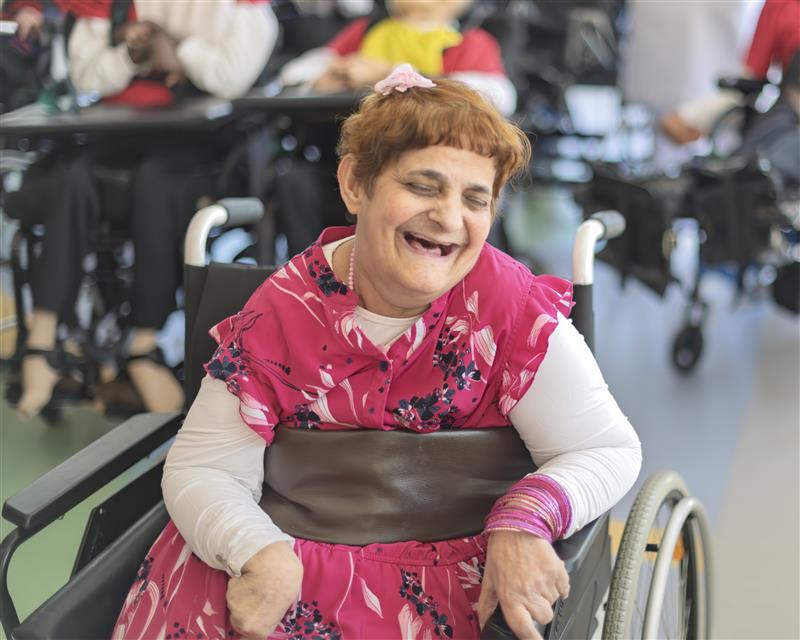
Integrated care refers to providing full residential care for children with severe and multiple disabilities who fundamentally require specialized beds, seating, devices, and daily equipment, and whose families find it difficult to care for them at home.
The association requires parents of children enrolled in the integrated care department to take their children home on weekends and during the summer vacation. This is to enhance communication between the child and their family, strengthen family bonds, and prevent them from being severed in case the child remains continuously at the association.
Integrated Care
Integrated care refers to providing full residential care for children with severe and multiple disabilities who fundamentally require specialized beds, seating, devices, and daily equipment, and whose families find it difficult to care for them at home.
The association requires parents of children enrolled in the integrated care department to take their children home on weekends and during the summer vacation. This is to enhance communication between the child and their family, strengthen family bonds, and prevent them from being severed in case the child remains continuously at the association.
Cases Referred to
the Integrated Care
Department
Since its inception, KSH has been committed to the intensive implementation of a program integrating the children with their families and society. Therefore, it strives with every possible effort to reinforce the concept and necessity of not separating the child from their family, except in cases of absolute necessity, according to specific requirements.
Nevertheless, the association requires the guardian to take their son or daughter home during the weekend, religious occasions—especially the blessed Eid al-Fitr and Eid al-Adha—as well as during periodic and annual vacations.
The association aims, through this, to grant the children a psychological respite by spending holidays among their family members. This allows them to experience family life and direct familial care, as each of them meets all their family members, goes out with them on tourist trips or family visits, enjoys recreational activities at entertainment venues, visits parks, or shares meals together at home or in restaurants. Consequently, the familial relationship grows naturally, and its strength solidifies between family members and the child with disabilities, ensuring that the bonds of communication, compassion, and love between them are not severed.
All departments of the association are keen to provide the utmost care and best attention to the children in the integrated care department. It offers them comprehensive and special clinical, therapeutic, and nursing services tailored to each individual, in addition to recreational services.
The integrated care department accepts cases of severe disability, most of which are cerebral palsy accompanied by intellectual and motor disabilities, and sometimes sensory impairments. Some cases are accompanied by other health problems, such as epilepsy, or feeding and nutritional issues like difficulty swallowing or chewing. This necessitates feeding the child via a tube. These are cases that require concentrated care and intensive supervision. Therefore, the association has provided qualified and specialized staff, both in health and psychology, who deal with each case according to its needs in the best possible ways. They treat them as their own children so the children feel they are part of one family, which helps limit harmful psychological impact.
The cases currently present in the association's integrated care department are:
Cerebral palsy with intellectual disability.
Cerebral palsy with visual impairment.
Intellectual disability with visual impairment.
Cerebral palsy with general developmental delay.
Cerebral palsy with normal intelligence.
These are cases that require special clinical care which may not be available to the concerned families. It is worth noting that the association undertakes some humanitarian cases in the event of the death of a parent coupled with severe disability, as they require care...
Cases Referred to
the Integrated Care
Department
Since its inception, KSH has been committed to the intensive implementation of a program integrating the children with their families and society. Therefore, it strives with every possible effort to reinforce the concept and necessity of not separating the child from their family, except in cases of absolute necessity, according to specific requirements.
Nevertheless, the association requires the guardian to take their son or daughter home during the weekend, religious occasions—especially the blessed Eid al-Fitr and Eid al-Adha—as well as during periodic and annual vacations.
The association aims, through this, to grant the children a psychological respite by spending holidays among their family members. This allows them to experience family life and direct familial care, as each of them meets all their family members, goes out with them on tourist trips or family visits, enjoys recreational activities at entertainment venues, visits parks, or shares meals together at home or in restaurants. Consequently, the familial relationship grows naturally, and its strength solidifies between family members and the child with disabilities, ensuring that the bonds of communication, compassion, and love between them are not severed.
All departments of the association are keen to provide the utmost care and best attention to the children in the integrated care department. It offers them comprehensive and special clinical, therapeutic, and nursing services tailored to each individual, in addition to recreational services.
The integrated care department accepts cases of severe disability, most of which are cerebral palsy accompanied by intellectual and motor disabilities, and sometimes sensory impairments. Some cases are accompanied by other health problems, such as epilepsy, or feeding and nutritional issues like difficulty swallowing or chewing. This necessitates feeding the child via a tube. These are cases that require concentrated care and intensive supervision. Therefore, the association has provided qualified and specialized staff, both in health and psychology, who deal with each case according to its needs in the best possible ways. They treat them as their own children so the children feel they are part of one family, which helps limit harmful psychological impact.
The cases currently present in the association's integrated care department are:
Cerebral palsy with intellectual disability.
Cerebral palsy with visual impairment.
Intellectual disability with visual impairment.
Cerebral palsy with general developmental delay.
Cerebral palsy with normal intelligence.
These are cases that require special clinical care which may not be available to the concerned families. It is worth noting that the association undertakes some humanitarian cases in the event of the death of a parent coupled with severe disability, as they require care...
© 2026-1971 The Kuwait Society For The Handicapped . All rights reserved | Made with ❤️ by the KSH Team